







My African Plan

Chuki Obiyo | I progress because we progress

5 Ways that Students Can Give Back to Africa

Written By: Chuki Obiyo - Apr• 07•12

Educating the mind without educating the heart is no education at all.
—Aristotle

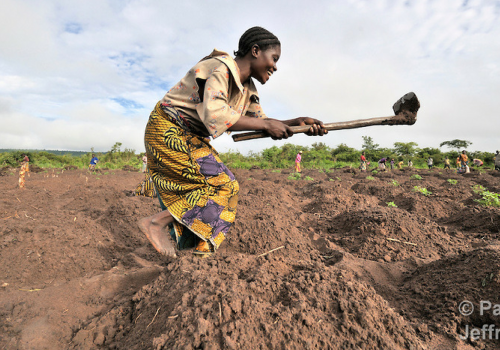
When my brother, Ozii, and I were in college at The University of Texas (and on financial aid no less), we decided to establish a scholarship program for college students in Africa.  The idea seemed far-fetched at the time, how can students who were struggling to pay their own school fees set up a scholarship program to help students in another side of the world deal with school expenses?

We championed ahead, even in the midst of criticism.  The principle we understood was that it is better to give than to receive.  Moreover, based on our own experiences as students, we believed we were uniquely qualified to create a scholarship program that targeted the true needs of students.

Giving back is living life.  The sense that you have to wait for a good time in your life to help others is nonsense.  There are so many ways to give back and in many ways that’s how to live life.

The students spotlighted below have …keep reading…

Top 10 Trends That Move-and-Shake Business Development in Africa

Written By: Chuki Obiyo - Mar• 12•12

1. Regional Integration


2. Development of Agribusiness


3. Expansion of Mobile Telecommunications


4. Chinese Investment in African Infrastructure


5. Brazil-Africa Collaboration in the Energy Sector


6. Demand for African Movies and Music from the Diaspora
…keep reading…

Yoruba Religion and Its Impact on Afro-Beat

Written By: Chuki Obiyo - Feb• 05•12

[This draft is part of a bigger project... thanks for reading!] 

“Water, e no get enemy…I dey talk of black man power…”   When the late, great Fela Anikulapo Kuti uttered these words in the chorus to his song with the same title, the phrase resonated a feeling of empowerment for oppressed blacks all through the continent of Africa and beyond.  However, few noticed that the inspiration for that phrase in Fela’s song was directly derived from elements of Yoruba religion: metaphysics-medicine and the belief in God.  In this draft, I will discuss how the elements of Yoruba religion have impacted afro-beat music.  To do this, I will first outline some of the key elements of Yoruba religion; and then, I will consider the history and content of afro-beat and opine on its interplay with the elements of Yoruba religion.

First, the elements of Yoruba religion can be defined as the belief in God (Olódùmaré), the belief in spirits, the reverence of ancestors, and the appreciation of metaphysics (idan)-medicine (oogun).  The belief in God among the Yoruba is portrayed in oral traditions such as Yoruba myths, proverbs, adages, epigrams, riddles and recitals dating back centuries.  These oral traditions remain the main sources of insight to the Yoruba view of the universe, human origin, and the afterlife.  Some historians have processed these oral traditions as evidence of a Yoruba divinity – where the belief in one supreme being is compatible with the belief in a group of spirits different in kind from the supreme being.

In considering Yoruba oral traditions, you find that …keep reading…

Daisy’s Determination – Designed One Day at a Time

Written By: Chuki Obiyo - Jan• 08•12

This spotlight is on Daisy I. as part of my celebration of the movers and shakers that make progress happen. 

Daisy is a popular name for great women, films, songs, software, and even places (see here).  But did you know that the name Daisy comes from an Old English word, dægesege, which means “day’s eye”?  The concept of “day’s eye” came about because the petals of the daisy flower open at dawn and close at dusk (see here).  In essence, by watching the daisy flower, you can track the progress of your life, one day at a time.

Determination happens in your life when you come up with a purpose for doing something and then use that purpose as a guide to get it done.  This understanding of determination is particularly important to the creative process of life.  When you imagine how a sketch drawing becomes a multi-colored painting or how two spools of thread turn into a full outfit, what you are really imagining is determination.  A world without creative minds is … keep reading…

BongoLife.com: Igbo People Party Capital of the World!

Written By: Chuki Obiyo - Dec• 11•11

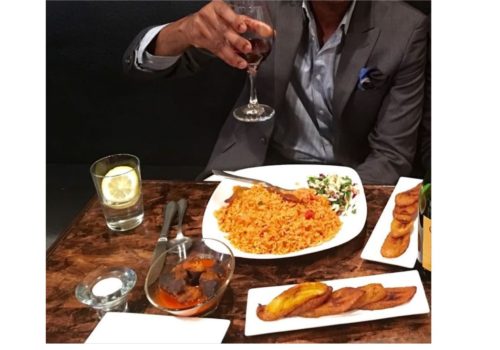
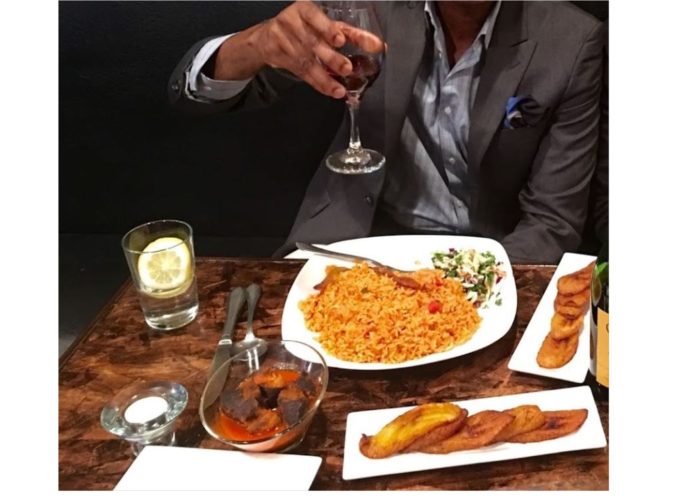
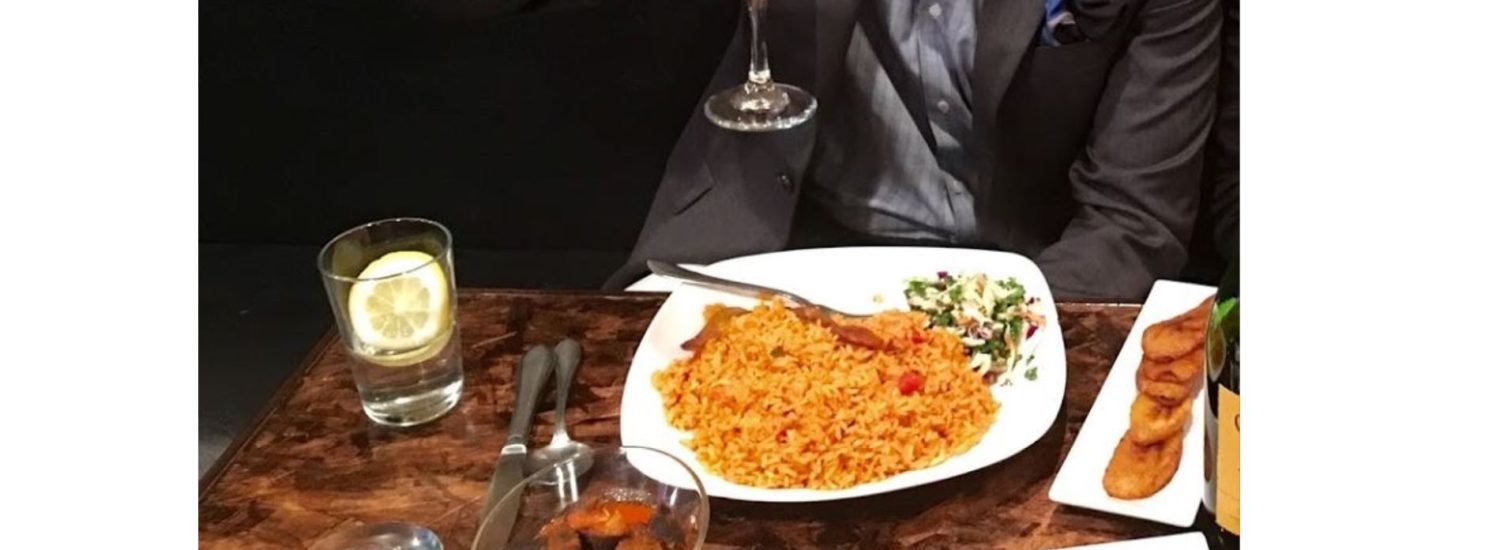
It was 12:31 am and the party had just started. The striking smell of jolof rice, ugba, and okporoko were in the air. The sterling sight of colorful African wrappers and head-ties with matching accessories filled the party hall. And the streaming sounds of laughter and cameras flashing blended in nicely with the music. Behold the power of an Igbo celebration!

Some minutes later, the master of ceremony, MC Igbo Kwenu, noticed that the guests of honor, Chief Dr. and Mrs. Owerri One, had just walked in. So he proceeded to invite them to the high table. The high table was positioned at the opposite end of the entrance to the party hall. As Chief Dr. and Mrs. Owerri One slowly danced their way to the high table, MC Igbo Kwenu gave a signal to the disc jockey of the party, DJ Bongo Music.

Upon seeing the signal from MC Igbo Kwenu, DJ Bongo Music methodically switched from the song “Ihe Oma” by Oriental Brothers International to the song “Diamond” by Ababanna. The old generation meets the new generation. This was no ordinary party. This was everybody’s party. This was a party about cultural celebration and patriotic progress powered by Bongo music.

Brief History of the Igbo People

The power of Bongo music electrifies the historical connection of all Igbo people. Igbo people can trace their origin to around 5000 B.C. according to evidence from musical artifacts and other elements. Early Igbo people set up a way of life that was based on the periodic observation of certain cultural festivities, and many of these festivities involved the use of storytelling accompanied by instruments such as drums and gongs. These instruments played a key role in shaping traditional Igbo music for centuries.

In the 20th Century, the world became more integrated especially after the founding of the United Nations. People from different parts of the world were linked together in new ways, and Igbo people began to add their voices to this new world order. The mix of people also led to a mix of music. Traditional musical instruments like drums were united with modern musical instruments like electric guitars— new sounds were created and Bongo music was born. Bongo music became a primary way to preserve traditional Igbo musical elements in a changing world.

As cultures mixed across the world, the desire for cultural identity ironically became louder. In Africa, this led to a wave of independence from colonial rule and a number of civil wars. After 1970, following the Nigerian Civil War, aka the Nigerian-Biafran War, many Igbo people left their homeland in southeastern Nigeria due to the war’s devastation. Some of these Igbo people ended up in other parts of Nigeria like Lagos and Port Harcourt. Some ended up in other parts of Africa like Ghana and Cameroon. And several left the continent altogether and moved to countries such as the United Kingdom and the United States. Today in the United States, prominent Igbo communities are still trying to establish a home away from home in cities such as Atlanta, Baltimore, Chicago, Dallas, Houston, and New York.

What connects contemporary Igbo communities across the world is …keep reading…

Understanding the “Pros” of Social Progress: 3 Cool Projects You Should Learn More About

Written By: Chuki Obiyo - Nov• 12•11

The pros outweigh the cons when true professionals focus on social progress.  Social progress is the belief that people can (and desire to) improve the quality of their lives in terms of communal, economic, and political systems.  Understanding social progress is about understanding people and their plans.  Progress comes in different shapes and sizes, just as professionals come from different backgrounds and experiences.  This is especially true in the world of non-profits and social enterprises— a world in which the focus on social progress is a full-time job.  In such a world, the intention to do good is simply not good enough.  Among the approximately 30,000 nonprofits created each year in the United States, as many as 50% fail within their first few years, (see Sagamore Institute – Multiplying Effective Charity).  And  only one-third of these non-profit startups survive beyond five years, says Stan Madden, director of the Center for Nonprofit Studies at the Hankamer School of Business at Baylor University in Waco, Texas. (see Time Magazine – Giving Back: An Investment with Meaning).

Social progress needs true professionals.  In other words, there are many pros to having true pros involved in social progress.  Take for example the decision to have a business plan– Time Magazine cites this as the best approach to guaranteeing the success of a nonprofit.  However, many nonprofits are launched without a business plan.  True professionals are not intimidated by business plans; in fact, several nonprofits run by true professionals have developed their fundraising plan directly from their business plan.  (see How to Develop an Effective Strategic Fundraising Plan).  In addition, true professionals tend to be better equipped to avoid (and even learn from) the mistakes of other non-profit startups.  Some of these mistakes include the failure to keep good records, poor initial research of social need, and the mismanagement of volunteers’ time.

All things considered, what is most notable of true professionals is the operating model they employ to advance their social progress project.  I highlight three projects below …keep reading…

Guest Post: The 10 Most Overused Movie Quotes

Written By: admin - Oct• 14•11

Movie Pic: Office Space

Submitted by: Rose King

Maybe it’s your best friend. Maybe it’s your boss. Maybe it’s someone you should seriously consider hiding from on Facebook. Whoever it is, there’s someone in your life who feels the need to speak in the most dated and obvious movie quotes available.

It’s not that there’s anything wrong with peppering conversation with pop culture touchstones. The problem is when you use the hackiest, most overused quotes possible. They’re not even jokes any more, just signs that the speaker hasn’t kept up with the times. The quotes below can only really be deployed ironically, and even then it takes practice and skill. Next time someone drops one of these on you, don’t be afraid to roll your eyes and let the line die. And if you find yourself tempted to use one: Just say no. (That’s an original one, right?)

  1. PC Load Letter?” from Office Space 
  2. “Say hello to my little friend.” from Scarface
  3. I know kung fu.” from The Matrix
  4. Houston, we have a problem.” from Apollo 13
  5. Say ‘what’ again!” from Pulp Fiction
  6. You had me at ‘Hello.‘” from Jerry Maguire
  7. Is nice!” from Borat
  8. You can’t handle the truth!” from A Few Good Men
  9. It’s just a flesh wound.” from Monty Python and the Holy Grail
  10. “Run, Forrest, run!” from Forrest Gump
This post is sponsored by BestOnlineColleges.com and the Movie: The Magnificent Dead (2010).

Strategic Philanthropy: Business-Minded | Open-Minded

Written By: Chuki Obiyo - Sep• 16•11


How Corporations Are Using a Shift to Strategic Philanthropy to Promote Human Rights While Improving Their Business Environment[1]

By: Priyanka Dahiya, Milu Hoppenbrouwer, & Chuki Obiyo


I.  Background[2]

In recent years, corporations have increasingly found themselves caught between critics demanding ever higher levels of corporate social responsibility, and investors who apply pressure to maximize profits.  As a response, a growing number of corporations have begun to shift from traditional forms of philanthropy involving charitable contributions, towards more strategic forms of philanthropy which leverage unique corporate capabilities to promote human rights.[3]

The challenge faced by many corporations in making this shift is how to best identify and use their core competencies to promote human rights in the locations in which they have a business presence, while at the same time aligning philanthropic initiatives with their long-term business prospects.  This challenge depicts an evolution from a “do no harm” model to a “do better” model.  Unlike a “do no harm” model which emphasizes the respect of human rights based on avoidance of human rights abuses (a negative responsibility), the “do better” model is consistent with the promotion of human rights (a positive responsibility).  To that end, the primary solution for dealing with the challenge of strategic philanthropy is found in answering the following question: How does a corporation promote human rights in a way that produces a benefit to its business?

This Good Practice Note provides an answer …keep reading…

Top 5 Projects in Africa for September 2011

Written By: Chuki Obiyo - Sep• 03•11

Top Flight Africa

1. African Christian Medical Missions, Inc. ( ACMMI). This project empowers volunteers from different walks of life to heal bodies and souls in Africa and the Caribbean.

2. African Leadership Foundation.  This project is about investing in the next generation of African leaders.  The project’s leadership development formula is based on three elements: potential, practice, and opportunity.

3. The Africa Project.  This project is administered by an all-volunteer team that supports …keep reading…

New Generation of New African Consultants

Written By: Chuki Obiyo - Aug• 04•11

JNC Consult

Introduction
All in a day’s work, they can go from meeting with a bank manager in her big, upscale office in the city to meeting with a tradesman in his small, village market stall. All within the course of a work week, they can help a private school administration digitize student records, and then help a public school teacher sign up for an email account. In a month’s time, they can activate an online advertising campaign for a telecom company, and then help a grandmother program her phone to receive money from her grandchild via text messages. In a given fiscal year, they can help a government agency implement online security mechanisms across all of its functions, and then help a group of microfinance entrepreneurs set up profiles for online banking. Who are they? …keep reading…